Intro to Datachef
Meet Datachef, the full-stack data platform.
Joe Fusaro
Founder, Datachef
Table of Contents
What is Datachef?
Datachef is not just another data warehouse as a service (I explain the differences here), but a full-stack data platform. What does that mean? You can:
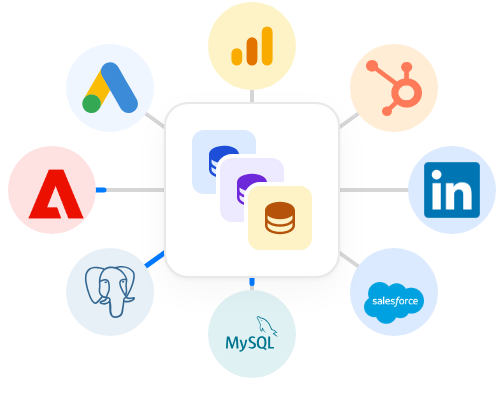
1. Connect
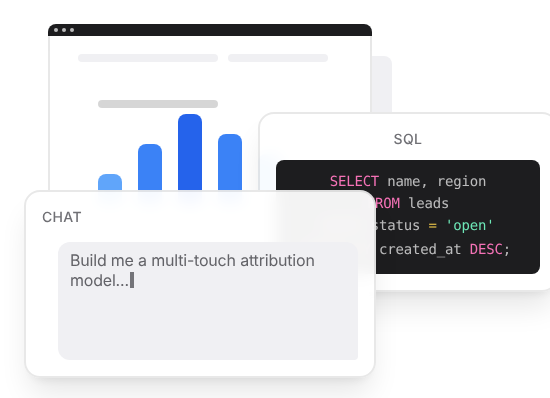
2. Explore
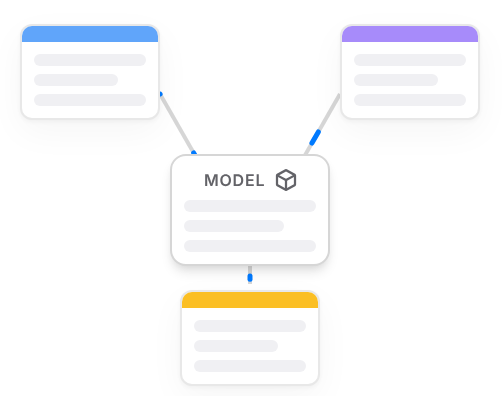
3. Model
4. Share
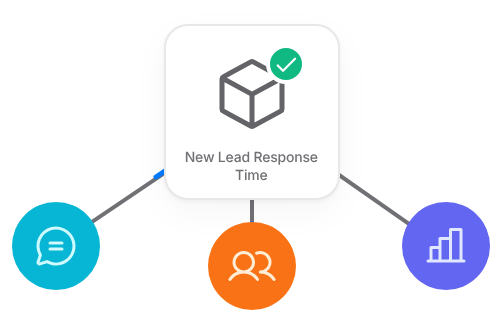
5. Integrate
What does that look like?
Take Anna, an analyst. Three VPs send her three unrelated requests on the same morning: a product engagement model, multi-touch attribution, and a pipeline forecast. Between them, they need data from four systems: the product database, marketing automation, web analytics and Salesforce.
With Datachef, she connects all four, models each request once and shares the models, all in one afternoon. From then on, each VP can ask the Datachef agent directly instead of waiting in her queue. Teams that already use their own AI agent can have it talk to Datachef, and it works from the same shared models.
Learn more on our demo wall, try Datachef for free, or contact us about your analytics projects and a Datachef solution engineer will get back to you.
What is a data model?
A data model is a codified way to combine, filter, and transform data to produce a table used for analysis.
You could have data models for any / all of the following:
- marketing attribution
- "speed to lead": how quickly and how often sales reps follow up with leads and customers
- return on marketing investment
- campaign engagement: how many prospects took key actions (e.g. requested a demo, purchased) after responding to a campaign
- monitoring adherence to data governance standards
It's important to make your data models available to your colleagues, otherwise you run the risk of duplicating efforts or, worse, reporting out metrics that may be named similarly but mean very different things.
Interested in prototyping one or more of the above? Learn more on our demo wall, or try Datachef free for 30 days.