Platform overview
Three asks. One afternoon.
What it shows
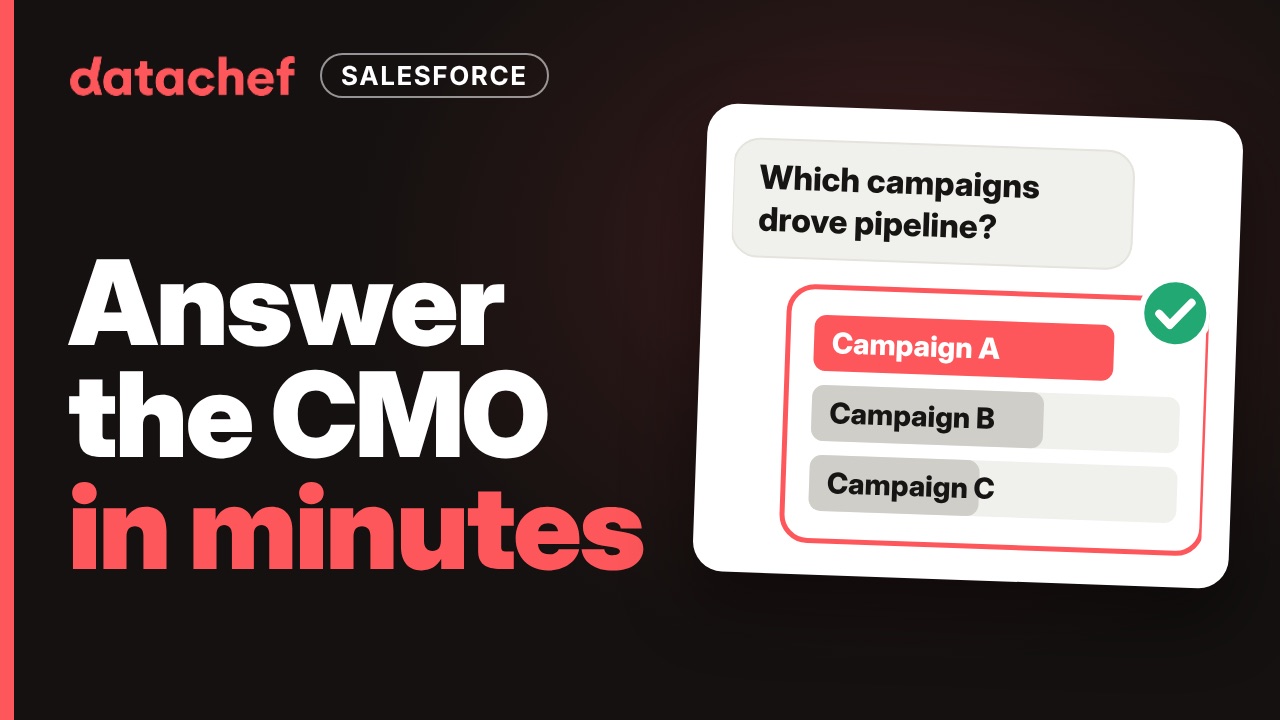
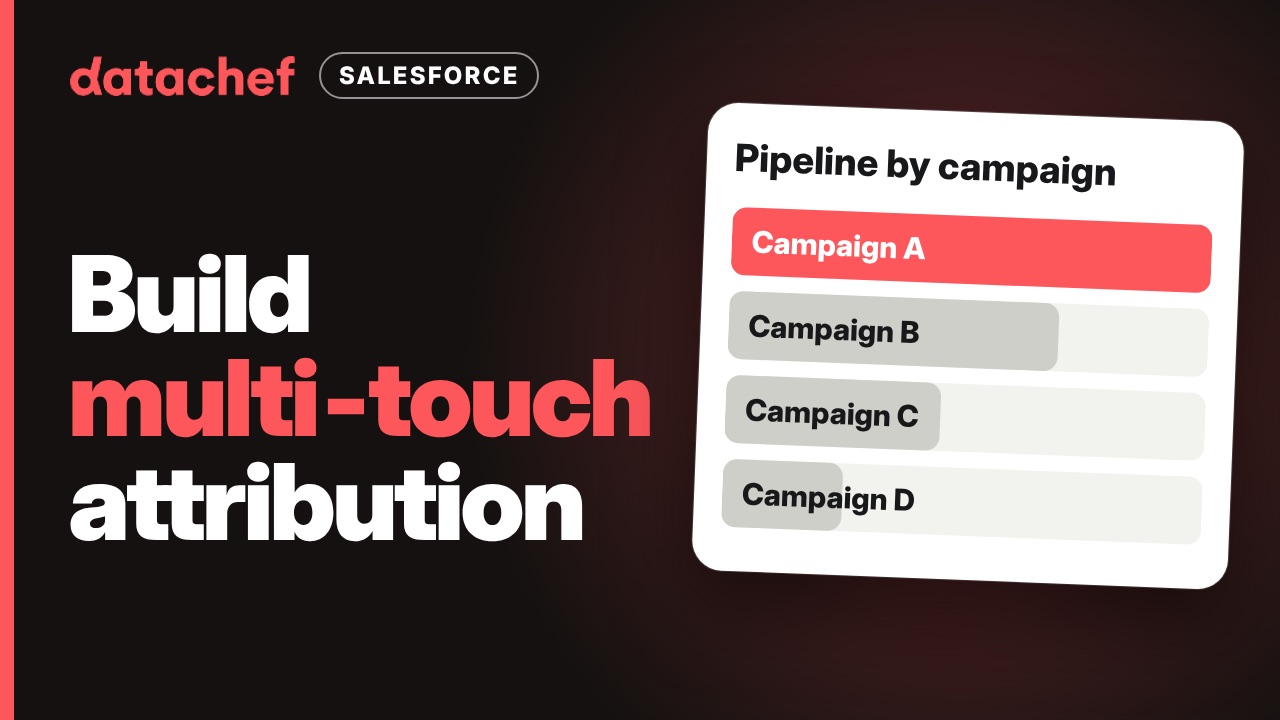
One analyst taking three unrelated requests that landed the same morning — a product engagement model, multi-touch attribution, and a weighted forecast with a read on pipeline health. Her own AI agent tries first, and stalls trying to download every source; with Datachef she answers all three in an afternoon: connecting the product database, the marketing automation platform, web analytics and Salesforce, modelling each request once, then sharing the models so each VP can ask the Datachef agent directly instead of queueing behind her, while her own agent builds dashboards on top of the same models.
Why you need Datachef for this
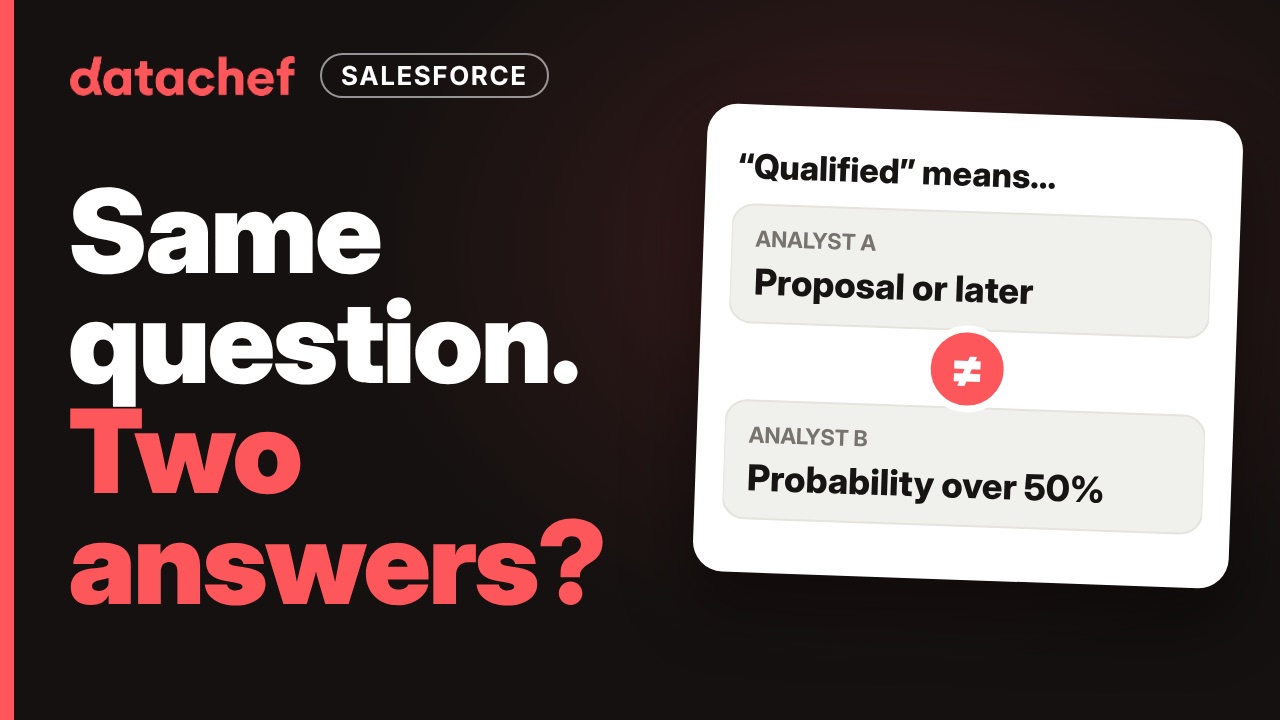
Those three requests read from four different systems, so the usual first step is not analysis but assembly: somewhere to land the data, something to keep tables and schemas maintained as the sources drift, and somewhere definitions can live so two people asking the same question get the same number. An AI agent cannot shortcut that by downloading everything into its session: production-sized sources do not fit. Datachef runs the full and incremental loads, creates and maintains the Iceberg tables underneath, versions each model so a changed definition keeps its history rather than quietly rewriting the past, and answers through the approved models — so the afternoon goes on the three models instead of the platform beneath them.